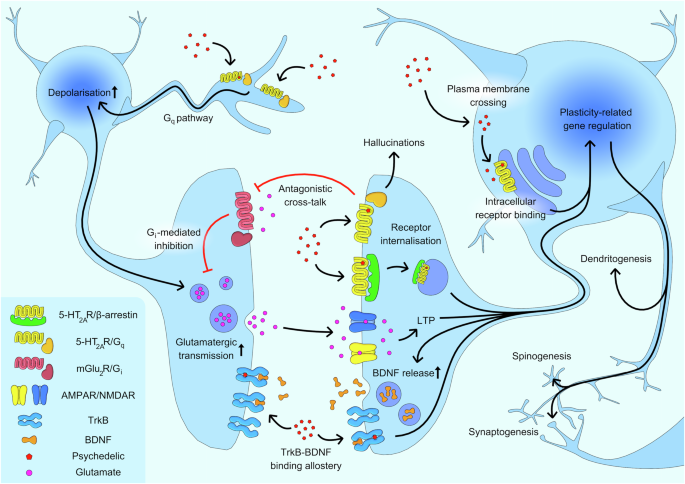
Psychedelic substances have garnered renewed scientific interest due to their potential therapeutic effects, particularly in treating depression and other mood disorders. Central to their mechanism of action is the 5-HT2A receptor, a subtype of serotonin receptor that plays a crucial role in modulating neuroplasticity and mood regulation.
Research indicates that activation of the 5-HT2A receptor by psychedelics such as psilocybin and LSD leads to significant changes in brain connectivity and synaptic plasticity. These changes are believed to underpin the rapid and sustained antidepressant effects observed in clinical studies. The receptor's activation triggers a cascade of intracellular signaling pathways, including the phospholipase C pathway, which ultimately results in increased expression of neurotrophic factors like BDNF (brain-derived neurotrophic factor). This promotes the growth of new neurons and synapses, fostering a more adaptable and resilient neural network.
Moreover, the 5-HT2A receptor's role extends beyond neuroplasticity. It influences emotional processing, perception, and cognition, which are often altered during psychedelic experiences. These alterations can lead to profound psychological insights and emotional breakthroughs, contributing to the therapeutic outcomes.
Preclinical studies have demonstrated that blocking the 5-HT2A receptor diminishes the neuroplastic and antidepressant effects of psychedelics, underscoring its essential role. Conversely, stimulating this receptor can mimic some of the beneficial effects, highlighting its potential as a target for novel antidepressant therapies.
Despite promising findings, challenges remain in translating these insights into widespread clinical practice. Concerns about safety, optimal dosing, and long-term effects need to be addressed through rigorous research. Nonetheless, understanding the precise mechanisms by which the 5-HT2A receptor mediates these effects could pave the way for new treatments that harness the benefits of psychedelics without the associated risks.
In conclusion, the 5-HT2A receptor is a pivotal component in the neurobiological response to psychedelics, mediating neuroplasticity and antidepressant effects. Continued research in this area holds promise for developing innovative therapies for depression and other mental health conditions, leveraging the unique properties of serotonergic signaling pathways.